Mark 8: The Bread That Reveals Jesus — From Loaves to the Cross
The Gospel of Mark, chapter eight, marks a profound turning point in Jesus’ ministry. It is a chapter of revelation, recognition, and spiritual awakening. Here, bread becomes more than food — it becomes revelation. The disciples slowly begin to understand who Jesus truly is: not merely a miracle worker, but the Son of God, the Bread of Life.
The Second Multiplication of Loaves: Bread for the Nations
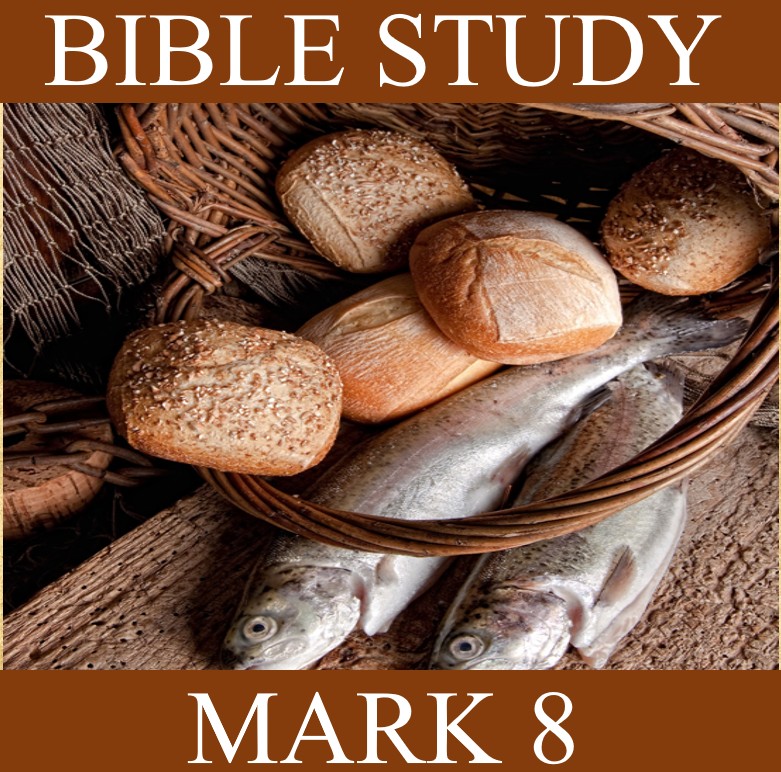
Mark 8 opens with another miraculous feeding. A large crowd has gathered around Jesus in the wilderness, hungry and exhausted, yet unwilling to leave Him.
Jesus says in Mark 8:2–3 (NABRE):
“My heart is moved with pity for the crowd, because they have been with me now for three days and have nothing to eat.”
This miracle is deeply significant because it takes place in Decapolis — Gentile territory. The first multiplication of loaves was among the Jewish people. Now, Jesus multiplies bread for the Gentiles.
The numbers themselves carry symbolic meaning:
- Seven loaves
- Seven baskets left over
In biblical tradition, seven signifies fullness and completeness. Deuteronomy 7:1 mentions the seven Gentile nations of Canaan. Through this miracle, Jesus reveals that the Bread of Life is not only for Israel, but for all nations.
Yet even after witnessing the first miracle of the loaves, the disciples still doubt. When another crisis arises, they once again wonder how the crowd can be fed. This reveals something deeply human: we often forget God’s previous faithfulness when facing new problems.
Jesus teaches the importance of remembrance. Gratitude protects the soul from unbelief. When we remember the graces and miracles God has already worked in our lives, faith becomes stronger for future trials.
The Pharisees Demand a Sign
After this miracle, the Pharisees approach Jesus demanding a sign from heaven.
Mark 8:11–12 (NABRE) says:
“The Pharisees came forward and began to argue with him, seeking from him a sign from heaven to test him. He sighed from the depth of his spirit…”
This sigh is important. It is not frustration because Jesus lacks power. It is sorrow over hardened hearts. No miracle is enough for those who refuse to believe.
This echoes Numbers 14:11, where God says:
“How long will this people spurn me? How long will they not trust me despite all the signs I have performed among them?”
Faith is not built merely on signs; it is built on surrender.
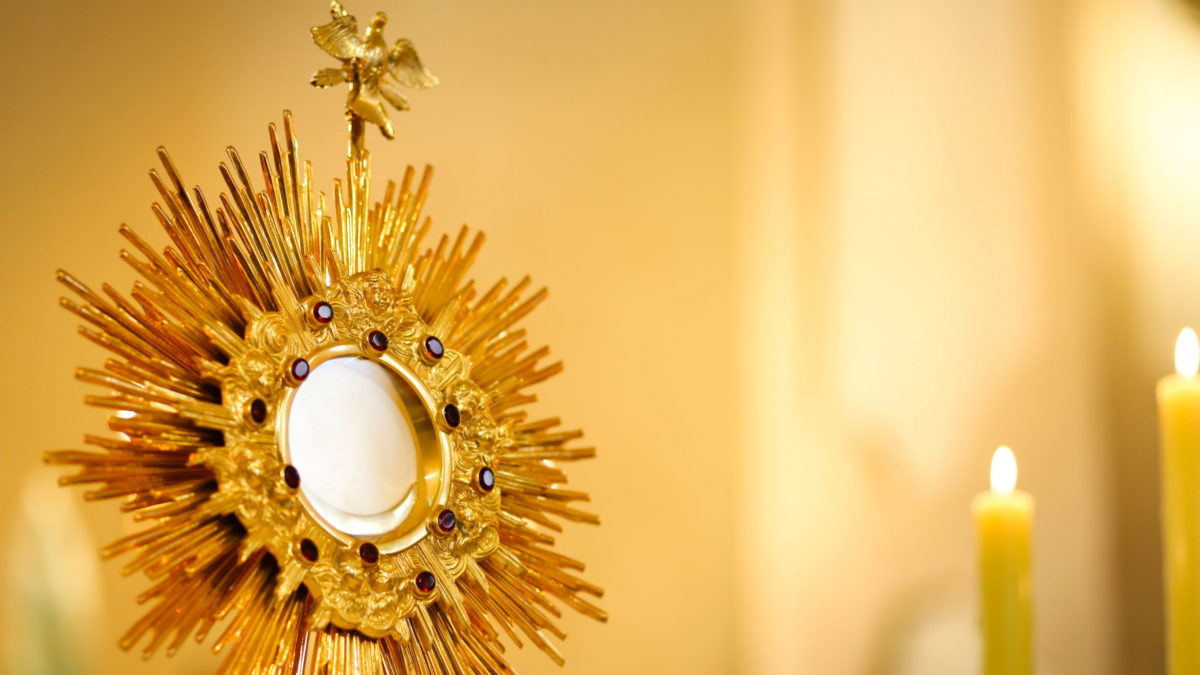
Even today, the Eucharist remains the greatest miracle — Christ truly present — yet many continue asking for proof while overlooking the Presence already before them.
The Leaven of the Pharisees and Herod
While crossing the sea, the disciples realize they forgot bread. Jesus warns them:
“Watch out, guard against the leaven of the Pharisees and the leaven of Herod.”
— Mark 8:15 (NABRE)
The disciples misunderstand and think Jesus is speaking about physical bread. But the irony is striking: they already have the “one loaf” with them — Jesus Himself.
The “leaven of the Pharisees” represents hypocrisy — outward religion without inward transformation. The “leaven of Herod” represents compromise — hearing truth while continuing to live in sin.
Jesus asks them:
“Do you have eyes and not see, ears and not hear? And do you not remember?”
— Mark 8:18 (NABRE)
These questions are not only for the disciples; they are for every believer. Especially when approaching the Eucharist, Christians are called to see spiritually, hear attentively, remember God’s faithfulness, and approach with sincerity of heart.
The Blind Man of Bethsaida: Healing in Stages
Mark then presents the healing of a blind man in Bethsaida. Unlike many other healings, this miracle happens gradually.
Jesus takes the man by the hand and leads him outside the village. Then He touches his eyes and asks:
“Do you see anything?”
The man replies:
“I see people looking like trees and walking.”
— Mark 8:24 (NABRE)
Only after Jesus touches him a second time does he see clearly.
This miracle symbolizes the spiritual journey of the disciples — and of every believer. Spiritual sight often develops gradually. Understanding Jesus fully is a process.
Jesus first removes the man from the crowd and the comfort of familiar surroundings. Likewise, God sometimes leads people away from distractions before revealing deeper truths. Growth in faith often requires separation from environments that keep the soul spiritually blind.
Peter’s Confession: “You Are the Messiah”
The chapter reaches its climax at Caesarea Philippi, a place known for pagan worship and idols. There, Jesus asks His disciples:
“Who do people say that I am?”
— Mark 8:27 (NABRE)
The answers vary: John the Baptist, Elijah, one of the prophets.
Then Peter declares:
“You are the Messiah.”
— Mark 8:29 (NABRE)
For the first time in Mark’s Gospel, Jesus’ identity is openly proclaimed. Yet even Peter does not fully understand what being the Messiah truly means.
The people expected a political ruler, a conquering king, or a powerful earthly deliverer. They struggled to accept that the Messiah would come as a humble teacher, the son of a carpenter, and ultimately suffer and die.
From this point onward, Jesus begins His journey toward Jerusalem — the journey of “the Way.”
The Way of the Cross
Jesus immediately reveals that the “Son of Man” must suffer, be rejected, be killed, and rise again.
Peter cannot accept this idea of a suffering Messiah. He rebukes Jesus, but Jesus responds strongly:
“Get behind me, Satan.”
— Mark 8:33 (NABRE)
Peter’s understanding of God is still incomplete. He wants glory without suffering, victory without sacrifice.
Then Jesus reveals the heart of discipleship:
“Whoever wishes to come after me must deny himself, take up his cross, and follow me.”
— Mark 8:34 (NABRE)
This becomes the central teaching of the journey from Mark chapters 8 through 10: the way of discipleship.
Following Jesus is not about comfort or status. It is the way of surrender, humility, sacrifice, and trust.
Jesus continues:
“Whoever wishes to save his life will lose it, but whoever loses his life for my sake and that of the gospel will save it.”
— Mark 8:35 (NABRE)
The world teaches self-preservation. Christ teaches self-giving.
Psalm 49 reminds humanity that no one can ransom his own soul. Salvation is too costly for human effort alone. Only Jesus could pay that price — and He did through the Cross.
Conclusion: The Bread, the Way, and the Revelation
Mark 8 reveals Jesus in stages:
- as the Bread who satisfies all nations,
- as the Lord greater than signs,
- as the One who heals spiritual blindness,
- as the Messiah who must suffer,
- and as the Way every disciple must follow.
The chapter ultimately invites every believer to deeper understanding.
When we come before the Eucharist, we encounter the same Jesus who multiplied the loaves in the wilderness. He still feeds, heals, opens blind eyes, and calls people to follow Him.
And His question still echoes today:
“Do you not yet understand?”
He is the Bread.
He is the Messiah.
He is the Way.